
The most influential reviews.
The standard of the music industry since 1999.
Queens Of The Stone Age Discuss How Music Gives Voice to Difficult Emotions
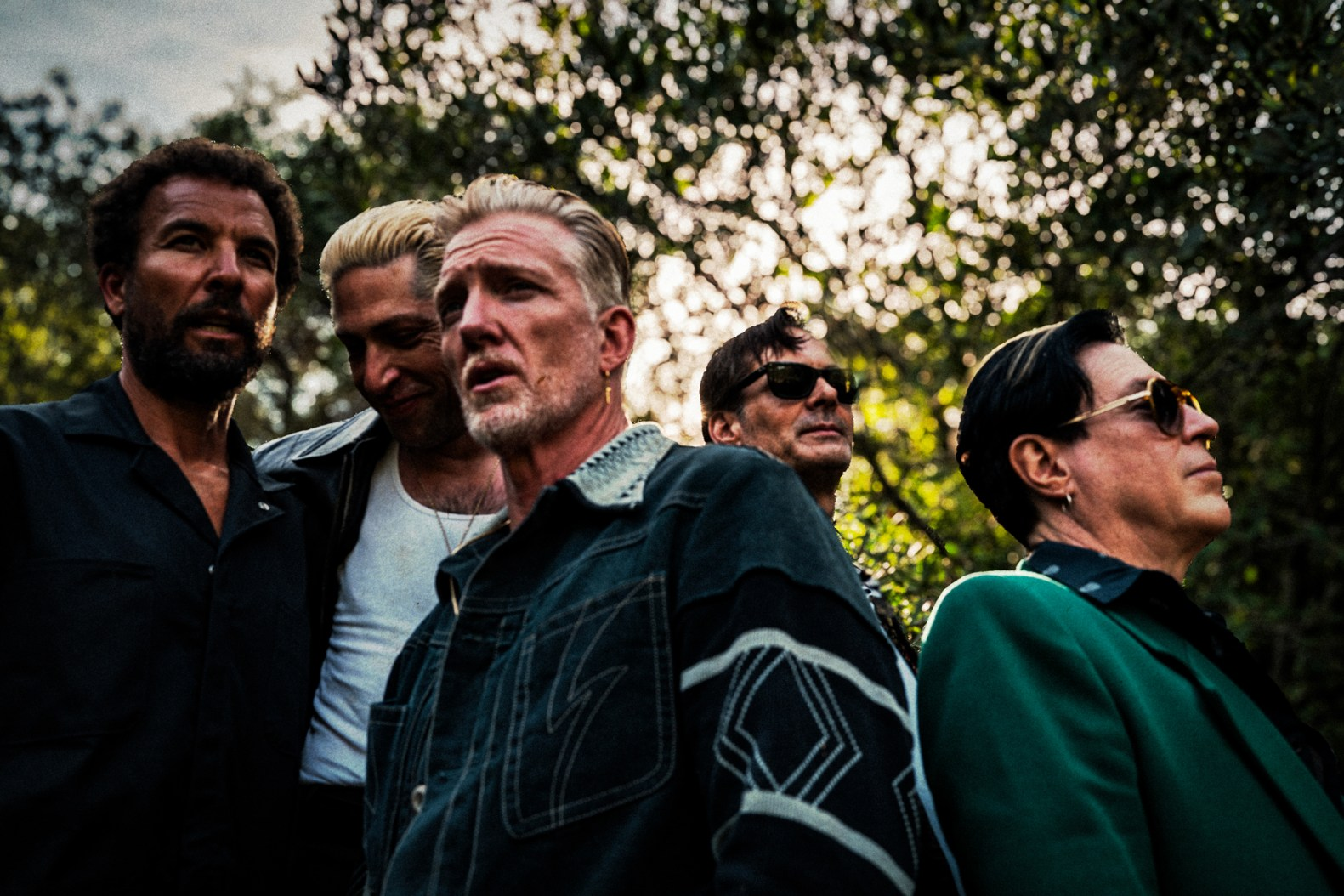
Happy Josh Homme Week! That is certainly how it seems when NME catches up with Queens Of The Stone Age at a luxury hotel in London during an eventful few days for the band. They have been making headlines after supporting System Of A Down at Spurs Stadium, teaming up for unexpected collaborations with Mastodon and *checks notes* Shania Twain, and introducing their own surprising new single, ‘Easy Street’. Homme has also been personally handing out tequila to members of the music press at a listening party for the band's unusual and adventurous new album, ‘Perfecth’, while still finding time to film an episode of Celebrity Gogglebox alongside his friend and Scissor Sisters frontman Jake Shears.
“Drinking and watching telly with your mate? It’s a piece of cake,” Homme says casually. A quick conversation about his and bandmate Michael ‘Mikey Shoes’ Shuman’s appreciation for Britain's dry, offbeat and often bizarre television comedy, including Monty Python, The Mighty Boosh, Garth Merenghi’s Darkplace, and the work of Matt Berry, Richard Ayoade and Philomena Cunk, helps explain the unusual mix of events filling the band's schedule. “I do have a fondness for world-jumping,” the frontman admits. “That’s what makes me happy: wherever I’m not supposed to be, there I am.”
What about the afterlife? One destination the desert rock veterans never imagined visiting was the underground resting place of six million people beneath Paris. There, they filmed an extraordinary performance among the remains for Alive In The Catacombs. The experience also brought Homme face to face with his own mortality following his battle with cancer and the “medical emergency” that forced the band to cancel their tour, both explored in the accompanying documentary Alive In Paris And Before. Together, the projects offered a powerful reminder of how fragile life can be. Last year, the band continued in a similar direction with a more intimate and theatrical run of live shows. Stepping away from their familiar hard rock sound, QOTSA appeared to be reflecting on their past while exploring new ways to approach their music.
 Queens Of The Stone Age at Royal Albert Hall (Photo by Jim Dyson/Getty Images)
“It's something you look for in your personal life, stability and a feeling of peace at home and in other areas, but I never want that when I'm performing music,” Homme explains. “I want chaos and uncertainty. Those are moments to experiment and almost feel underwater with those emotions. It’s the right place for that. The ‘Catacombs’ shows were terrifying to do because there was nowhere to hide. That’s exactly the sort of thing we’re looking for.”
Their willingness to embrace the unfamiliar eventually took them into unexpected territory on their ninth album, the playfully named ‘Perftech’. The record offers a broader and more soulful sound than the sharp, hard hitting anthems that made them famous with tracks like ‘No One Knows’. It explores the different sides of love, including its beauty, mysteries and uncertainties, before arriving at a deeply human realisation that “there is no perfection, and that’s OK,” as Homme puts it. “It’s perhaps an ideal you strive for, but not something to expect,” he explains.
Watch the complete interview with the band at the top of the page, or continue reading as Homme and Shuman discuss how music can express feelings that words cannot, why love remains such a complicated subject, taking on a song by “the motherfucker” Iggy Pop, and learning to appreciate the unpredictable journey ahead. “I think our consistency is in our volatility,” Homme says. “which I know sounds like jumbo shrimp or central intelligence, but that’s what we have to offer: the uncertainty of an experience.”
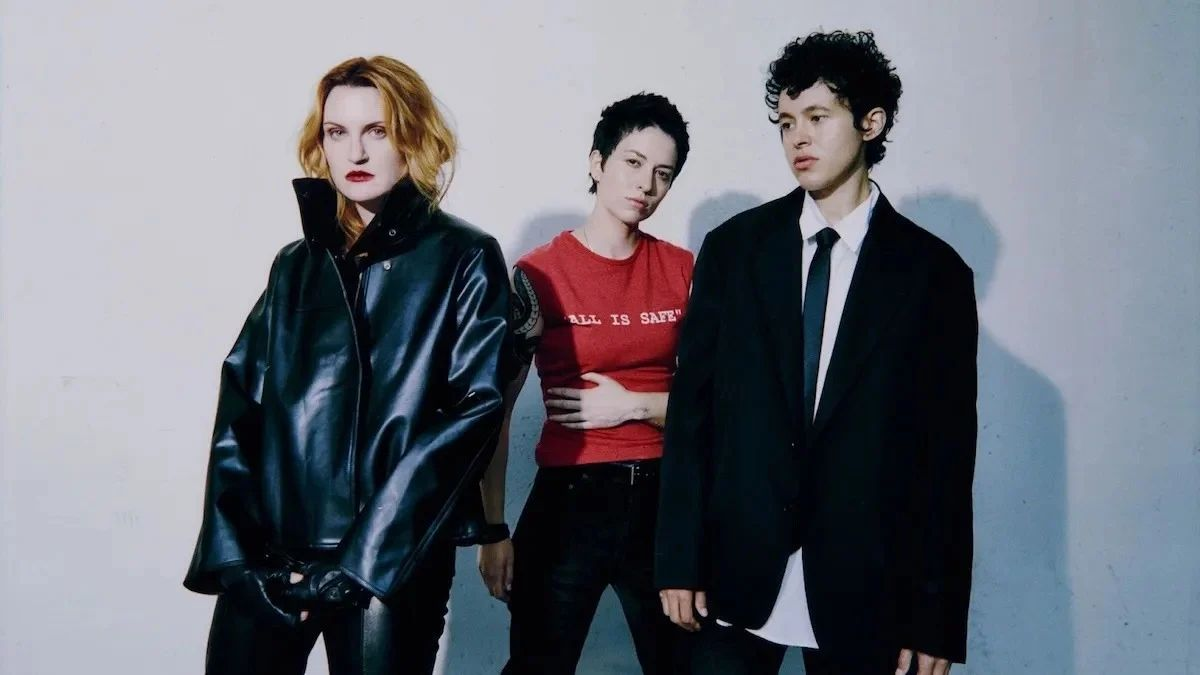
 Queens Of The Stone Age, 2026. Credit: Andreas Neumann
NME: Hello Queens Of The Stone Age. One thing that really came through the ‘Catacombs’ film and documentary was the family bond in Queens. Do you think that everything you went through with your health issues, being given the all clear – did that tighten up your chemistry heading into this record?
Homme: “Obviously there are all types of bands and the relationships they have. We’re sort of like a gang. That’s where our desire is: to figure out how to communicate and understand each other better. When we start making new music, we get to skip a bunch of steps because it’s already understood. The goal of music for us is to be able to play things that are difficult to say. It requires that bond to get closer to the essence of playing how you feel about something, whatever that topic is. It’s become a necessity for us as a band where, if we have any differences, we have to figure them out.
“If that topic is chaos, we need to know that we’re ready to go. This is an experiment in trying to do something that you think is cool, if you’re really trying to simplify it. It’s better if we’re on the same page.”
When we last spoke, you said that previous album ‘In Times New Roman’ was you “trying to write your way out of your troubles”. Where were you at this time? What was music to you?
Homme: “Honestly, this is a record about all the facets of love. I don’t think that we could have or I could have written about that exclusively in the years previous, but we’re here now. I think writing about family, friends, significant others, insignificant others, the immense soul-crushing brutality of heartbreak and how love is the only conduit to some semblance of hope – there are so many facets to the mental health issue that is love. It’s nice to be able to finally participate in something as simple as that conversation.”

It’s interesting that you’ve been on the road with System Of A Down and Foo Fighters; they say there’s something of a rock renaissance going on, and yet you’ve come back with an album that’s so weird, heartfelt and nuanced…
Homme: “We always seem to be in the wrong spot with all this trending shit. We really need to pay attention more and capitalise on our market share.”
Shuman: “Unfortunately, we’d already made the record, but we were late to the party, but that’s not what we’re trying to do when we make a record. We’re trying to challenge ourselves, go past the boundaries and past the walls. Josh talked about getting over the wall of fear, and that’s exactly what we did. We discussed that as we went past it. It felt like the right record to make, especially as we were living in The Catacombs world for a year. It just felt the most natural.”
What kind of conversations were you having about making such an atmospheric record?
Homme: “If what you’re doing is enjoying trying to figure out how to sonically play an emotion, then you get obsessed with that, and that’s your art project. How do you play what it feels like to let go? How do you play heartache and make it sound as close to that as possible?
“When you’re getting swept away and figuring out those things, then you don’t really give a fuck if there’s a rock renaissance going on. That just sounds like a sticker someone would put on a piece of ham to try to sell it before it goes bad! I think it’s OK to allow yourself to enjoy the gift of doing this as a job. I think there’s an obligation to mine the bizarre recesses of your personality and the experiences that we all go through. People die, people are born, people walk away, people come close. Examining that stuff feels interesting and complicated. The rest of the parts of this really melt away when you focus in on those types of things.”
Mikey, you’re a named producer on this album. What led to you going all-in?
Shuman: “Josh and I just spent a lot of time together in the studio coming out of ‘In Times New Roman’ and into this record. We spent a lot of time discussing.”
Homme: “We also recorded all over the place, so the songs needed to be tied together. We just spent a lot of time figuring out to pull together all of these disparate corners of music. Ironically, there’s a lack of consistency, so we’d just say, ‘Well, it’s just sort of a quilt of things. It’s bringing this patchwork of different sonic things’. It’s not like there’s one sound all the way through; in fact, it’s more like a Beastie Boys record where it feels like listening to a mixtape. If you just allow that, it’s fine. It needed to be brought together.”
‘Easy Street’ was a very surprising introduction single to the record. What does it tell us about the world of ‘Perfecth’?
Homme: “There’s a bit of gallows humour in the song, but it really is just a wish to end up on ‘Easy Street’ yourself, and that you can share that location with the people you care about. A girl’s gotta dream, you know what I mean?”
Tell us about this new version of ‘Sunday’ – why did you decide to revisit that song from your 2016 Iggy Pop collab ‘Post Pop Depression’ for this record?
Homme: “I was walking away from recording that song at night from one building to the next when we were in Joshua Tree. I liked that song so much I thought, ‘I’m gonna keep it to myself’. For I realised something for the Iggy session, and in the morning I said, ‘I came up with this song last night, and I almost kept it to myself, but that’s not the point of this. I want you to know that you have everything that I have to give for ‘Post Pop Depression’. The way of proving it was saying, ‘It’s not mine or yours, it’s ours. And if we ever need to, we’ll just cover it’.
“There was a roadmap there in ‘China Girl’ [an Iggy and David Bowie collab recorded by both artists] that already showed this pathway. The record really needed something jiggly that bubbles like ‘70s French disco. That song really does that thing.”


What does Iggy think of your version?
Homme: “He fucking hates it… No, we got his blessing. In all of rock n’ roll, Iggy is really something special and individual. I think it’s amazing that he’s the one who outlasted them all. There’s something of a roadmap there in being yourself, and how even when that is a very lonely journey, you must move forward. He’s the motherfucker.”
Did reworking this song give you the hunger to work with Iggy again?
Homme: “My door is always open to Iggy, but these things can’t be forced. They happen when they’re supposed to happen, and that’s the way it goes.”
After the Catacombs and with this album being such a different vibe, what do you have in mind for the upcoming tour?
Homme: “Well, there’s a lot to cover. I think the Catacombs have changed us forever, and so there is no going back – there’s only forward. I think we’re going to do something that’s beyond what we’ve ever done before. We learned something about the theatrics of all that, almost Vaudeville and magic. We’re going to do something I really don’t want to talk about.”
Josh, you’ve said that this album is the beginning of the band’s third act. What does that mean to you, and how do you approach the music from here?
Homme: “Well, I just felt that if the Catacombs should ever happen, then it would signal a moment to pivot. I don’t know if it’s right or wrong, but I’ve always felt that every artist has three phases that you go through. It’s important not to rush through them. When you’re starting out and you think you’re doing things that the world has never seen before, which is a thought that only someone in their twenties could have. Then the second phase of this you understand where you’re at and you start to understand what’s possible and start to push boundaries.
“For me, that second phase was war and attack, to push buttons and look for chaos and thrive in that. That third act is about searching for peace somehow, and taking part in being a part of not just your own peace but others as well; allowing things that were maybe terrifying previously to just be terrifying and accept them, but what do I know?”
‘Perfecth’ by Queens Of The Stone Age is out now.

.jpeg)
COMMENTS
Leave a comment